"Those are the conditions that led the City Council to act, and the court's ruling does not change them." The City of Malibu said that in early September, as The Malibu Times reported, just days after a Los Angeles County Superior Court judge threw out its claim to the public trail easements along Winding Way and Murphy Way.
The lawsuit asked who owns the trails, and the court answered. The rest of what the City described, from the small lot at the bottom of the hill to the cars along both shoulders of Pacific Coast Highway to sunset closures that go unenforced, comes into the rainy season exactly as it was in April. This winter also opens with a citywide emergency declaration. For anyone who lives on Winding Way, the trail at the base of the street is the same place it was last spring, under the same management, heading into what may be its hardest stretch of weather in years.
What the court decided on September 1
The case was City of Malibu v. Santa Monica Mountains Conservancy, Los Angeles County Superior Court Case No. 26SMCV02052. The City filed it in April. It argued that hiking and equestrian easements granted to the County of Los Angeles in the late 1980s passed to Malibu automatically when the city incorporated in 1991. The City's lawsuit FAQ describes a 1998 quitclaim deed from the County to the Conservancy and calls that deed ineffective, since in the City's view the County no longer held anything to convey.
According to the Mountains Recreation and Conservation Authority's release, the ruling made four findings:
- The statute did not fit. The City's case relied on California Streets and Highways Code Section 989, which moves county interests in "county highways" to a city at incorporation. The judge found that recreational hiking and equestrian trails are fundamentally different from the roads the law covers.
- The claim came too late. For decades the City had worked with the Conservancy and MRCA on managing and maintaining the trails and treated the agencies as the owners. The ownership theory first appeared in 2024.
- The statute of limitations barred it. In the judge's words, public policy would be undermined if a governmental entity could "suddenly assert legal ownership" after roughly 30 years of treating another entity as the true owner.
- No second attempt. The complaint was dismissed without leave to amend, because the additional facts the City proposed would not fix the problems the ruling identified.
The judge also called the City's ownership theory a "creative legal argument." George Lange, Chair of the MRCA Governing Board, said the decision "provides clarity about the ownership and management of these public trails."
The City's Sept. 3 statement said it was "evaluating its options, including appeal," and that nothing would be decided until the City Council reviewed the ruling and directed its attorneys. The court had the agencies lodge proposed orders and judgments by Sept. 14 and moved the case management conference to Oct. 22. As of that statement, an appeal remained possible. Unless one succeeds, the agencies that have run these trails for decades go on running them.
The conditions the lawsuit was about
The complaint was technically a title case, asking for quiet title and declaratory relief. But the City opened it with a list of conditions at the trailhead, and that list is the useful part for anyone who drives past the lot.
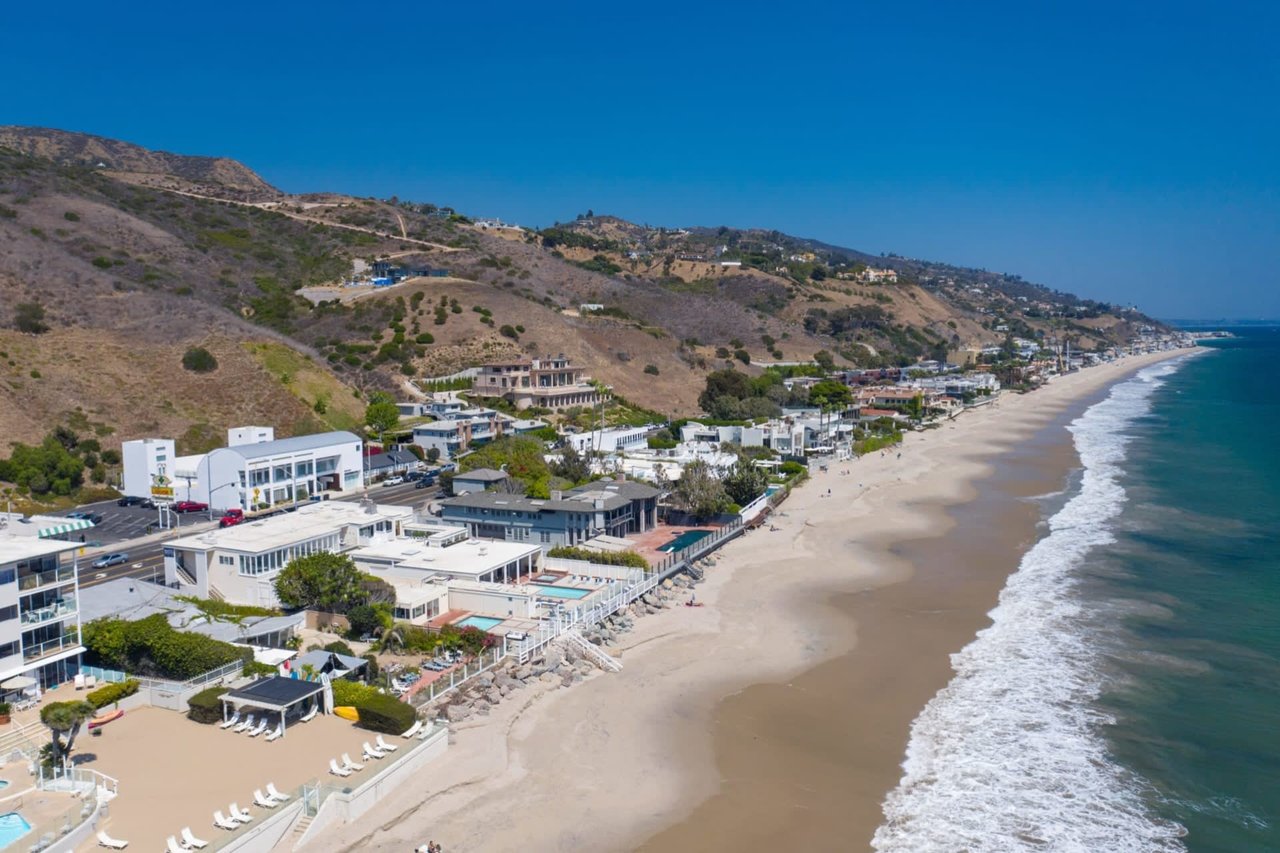
The City's complaint says the trailhead parking area has 12 spaces, that many visitors park on both sides of PCH as a result, and that the posted speed limit on PCH near the trailhead is 50 miles per hour. The FAQ adds pedestrians walking PCH's unimproved shoulder, sunset closures that are not consistently enforced, trash building up along the trails, and a claim that poor trail maintenance has raised wildfire risk. According to the City, it first raised the parking and crossing problem with MRCA in a formal letter in July 2024. That letter cited illegal parking, U-turns and people walking on the shoulder. On Feb. 8, 2026, at about 7:30 p.m., a pedestrian was struck and killed on PCH near the Winding Way trailhead.
The City told residents that if it won, its parks department would take over management, enforce the sunset closure, manage parking, remove trash and keep the trails open. That plan depended on winning the title question, which it lost. After the ruling, the City said it was still willing to work with MRCA on parking, closure enforcement and vegetation management. In the words of The Malibu Times, the ruling "does not resolve the underlying disagreement" over how the trails should be maintained and managed.
For now, MRCA remains the agency on the ground. Questions about the lot, trail hours or upkeep go there, and anything that happens on the highway shoulder falls to Malibu and its partner agencies.
Why this winter puts the most weight on the trail
The disagreement would matter less in a dry year. Escondido Falls is the reason the crowds come, and it only runs after rain. MRCA's Escondido Canyon Park page calls the falls the highest in the Santa Monica Mountains and says the flow is "minimal or non-existent during dry weather." Any wet winter brings the falls back, and the visitors with them.
Malibu has already declared a citywide local emergency for this one. The declaration came on Sept. 28 and covers forecast El Niño flooding, mudslides, debris flows and coastal erosion. The City has to review it at least every 60 days, which puts the first review by late November. By the Oct. 22 storm advisory, rain had already arrived, and residents were told to watch for canyon-road hazards.
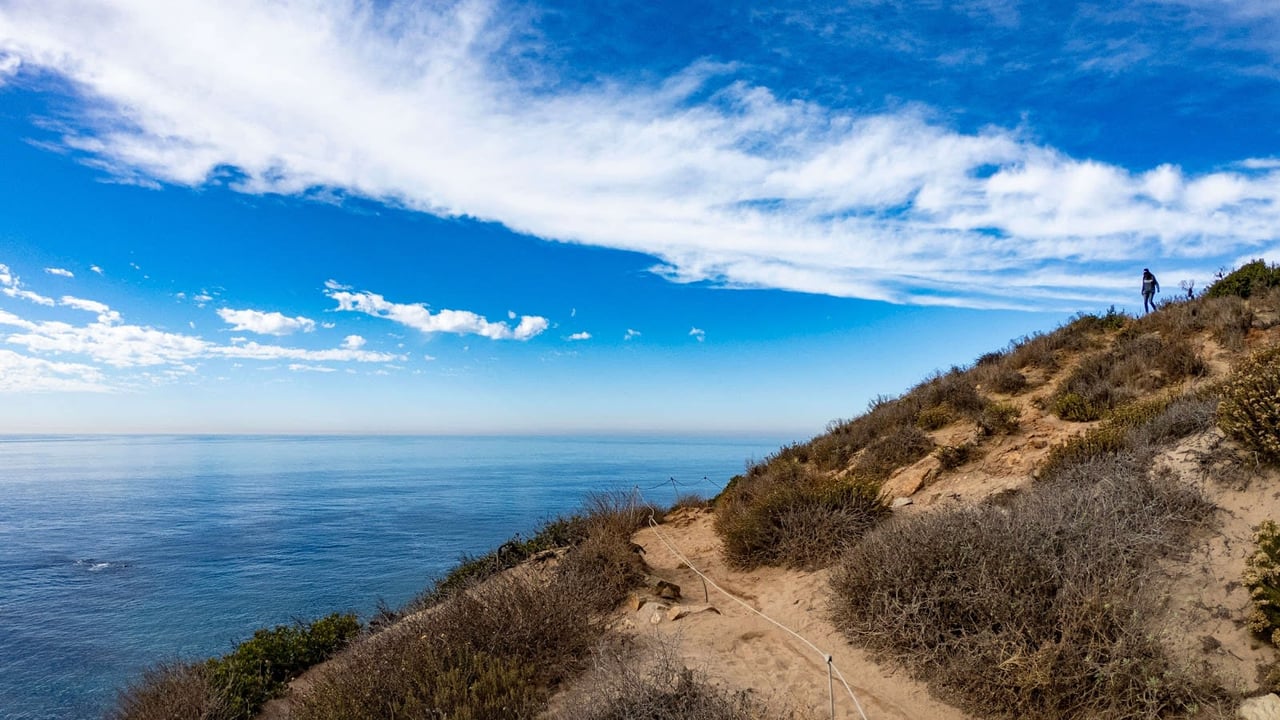
Here is the route a resident can see from the street, as MRCA's park page describes it:
| Segment | What MRCA's page says |
|---|---|
| Trailhead lot at Winding Way | Paid lot, listed at $12; no bathroom facilities beyond the lot |
| Paved road up Winding Way | About a mile on the road, which the page warns has "multiple blind curves" |
| Edward Albert Escondido Canyon Trailhead | Signed at the top of a meadow on the left, where the trail drops into the canyon |
| Escondido Creek | Seasonally dry, crossed several times on the way in |
| Lower falls | About a mile into the trail, where public parkland ends |
| Upper falls | Not open to the public |
Each segment matches a winter pressure point in the complaint. The first mile follows a paved road with blind curves. The creek crossings are seasonally dry and carry water after storms. The falls draw the most people after rain, and those are the same weeks when the 12 spaces fill and the PCH shoulders take the overflow. MRCA's page also says the canyon is a high fire risk zone where smoking and open fires are prohibited. The fire weather and the storm season overlap on this trail.
Below the highway, the beach stairs are closed too
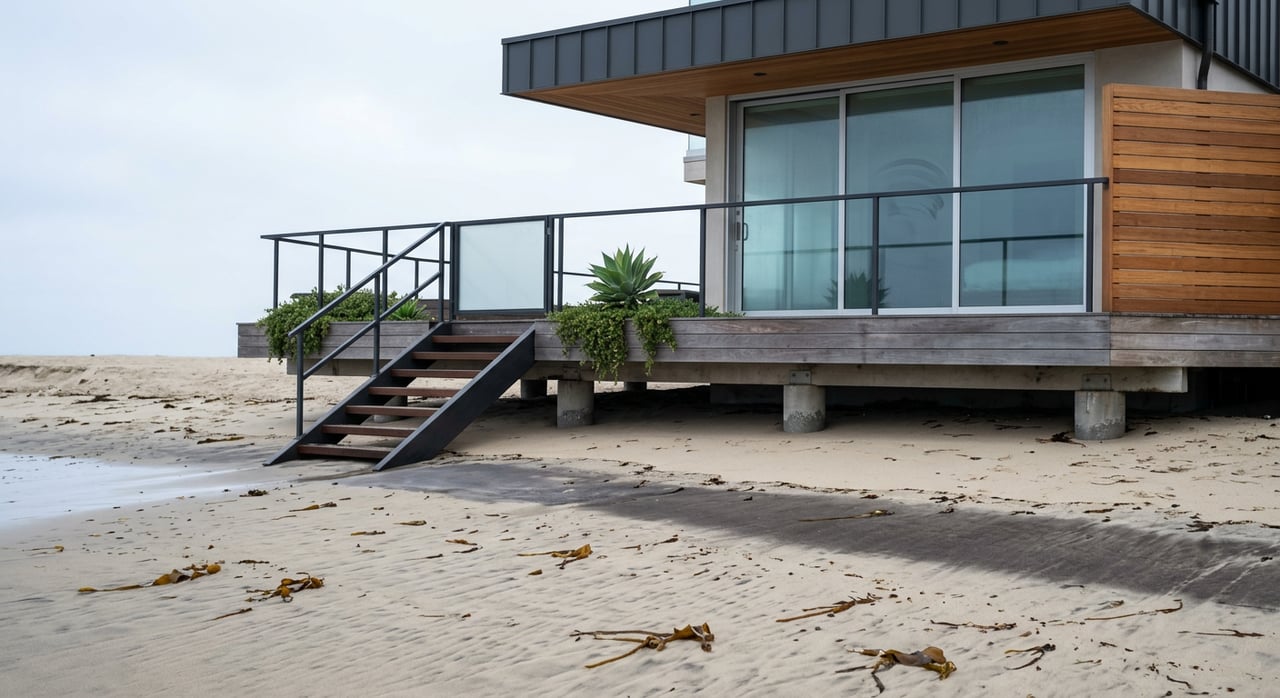
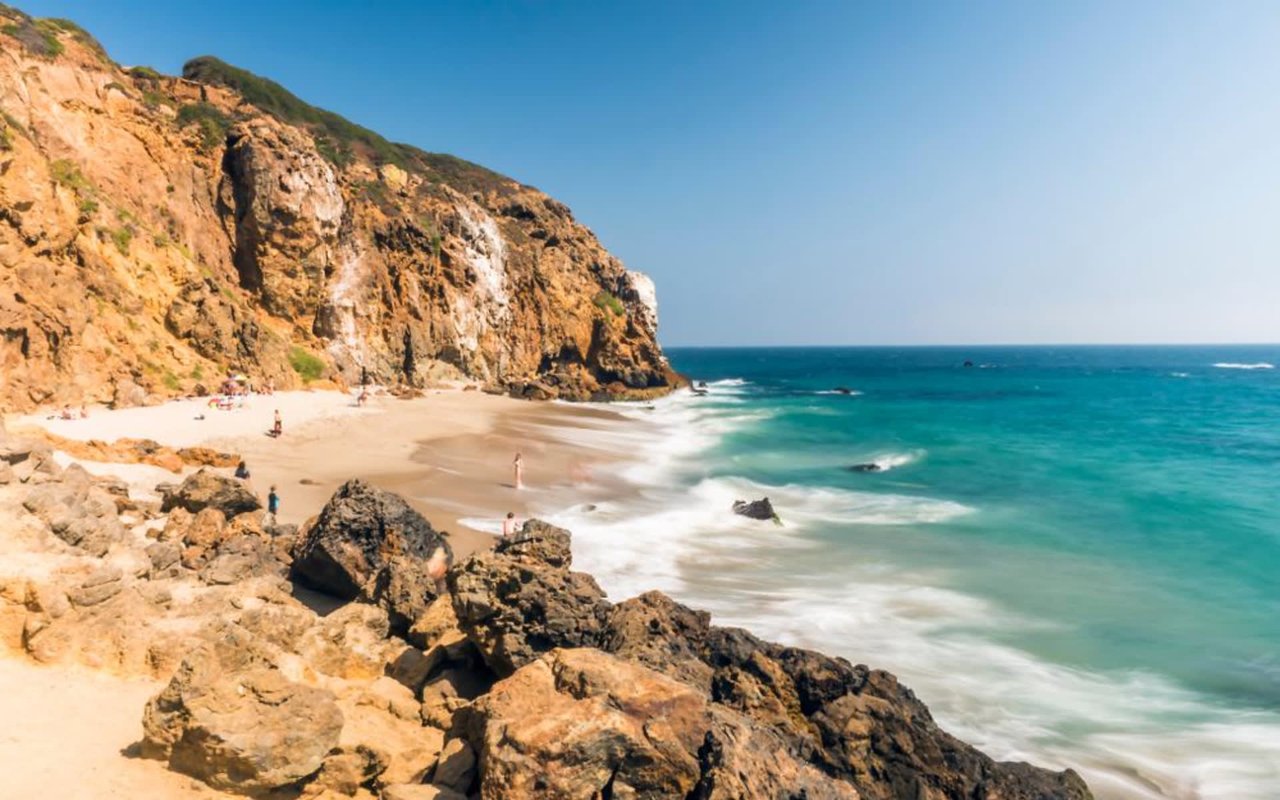
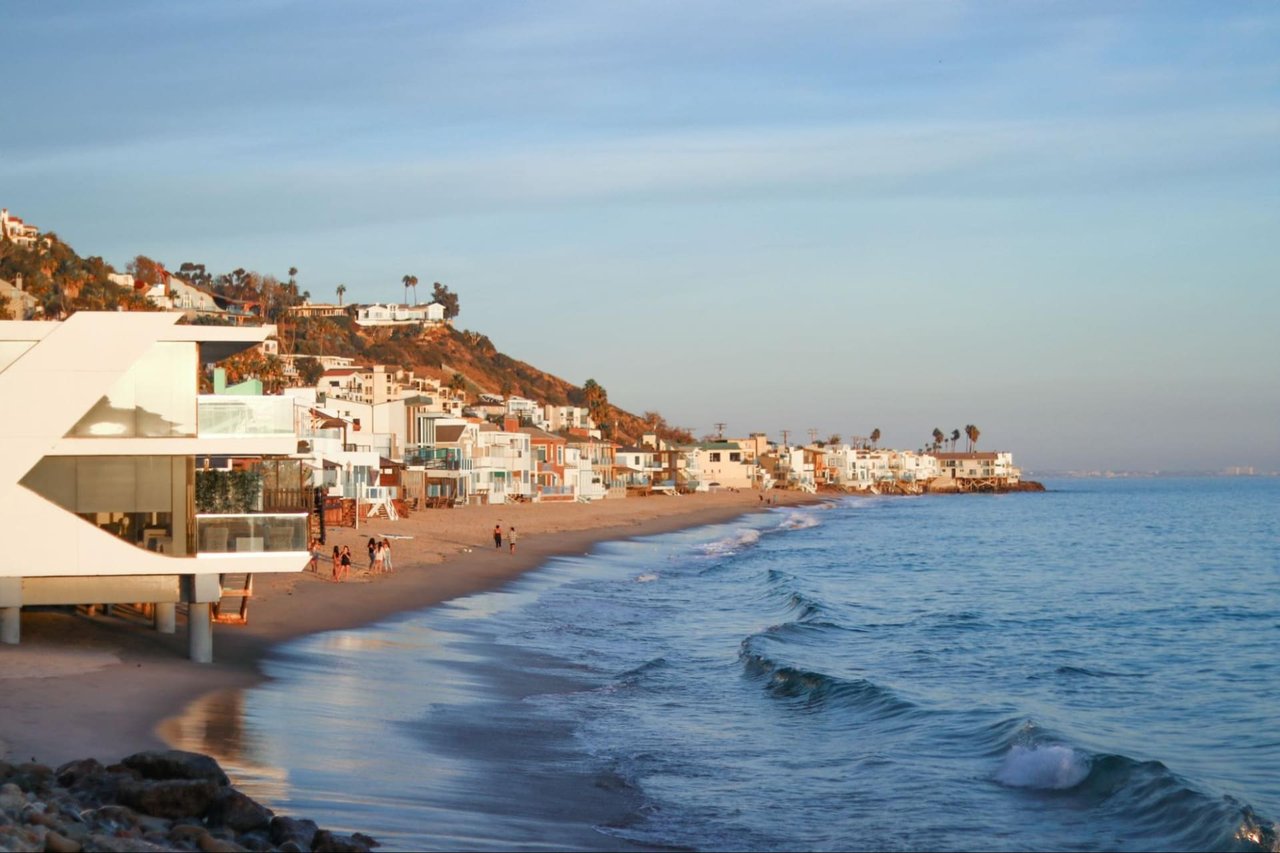
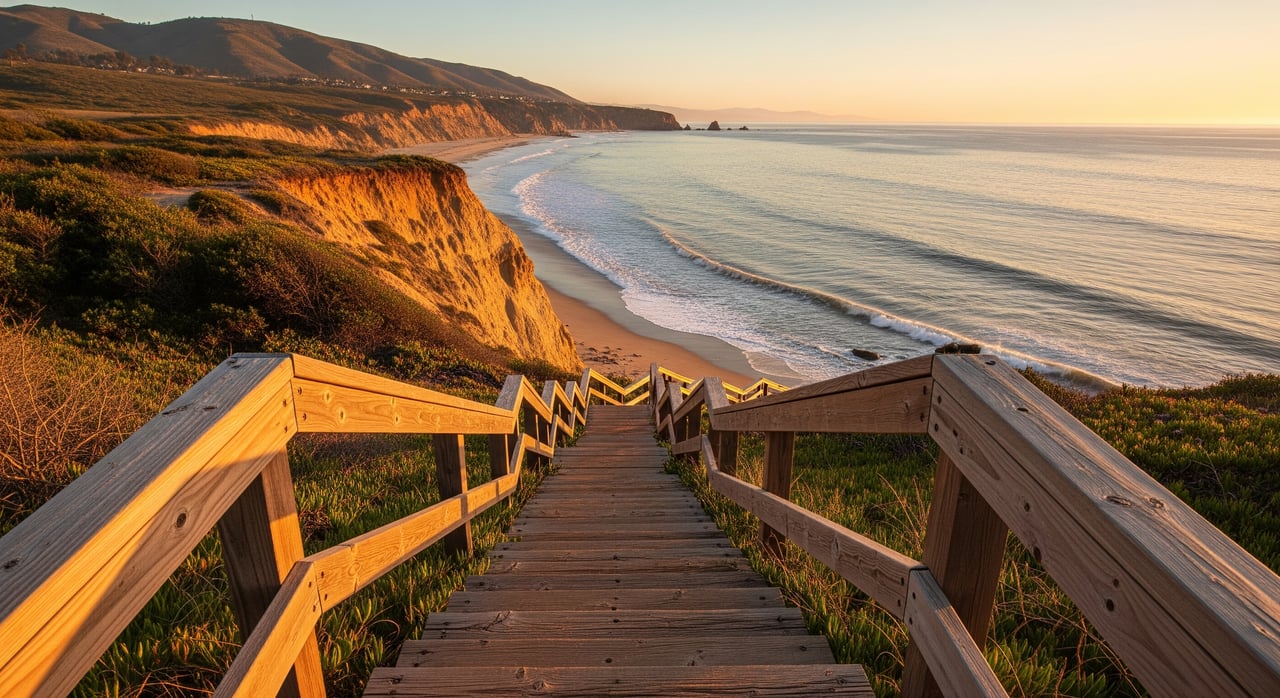
The trail isn't the only MRCA-administered access point near the bottom of Winding Way feeling the weather. The Malibu Times reported on Oct. 1 that the Cliffside Coastal Access stairway at Escondido Beach, at 27420–27428 Pacific Coast Highway, was temporarily closed. High surf and erosion had stripped the sand away and left the base of the wooden staircase exposed. Per MRCA notices, repairs and staircase extensions were under evaluation.
The stairs and the trail are the two public routes that start on either side of PCH at Winding Way, and both went into the season under strain. Check the MRCA notice before planning a walk down to Escondido Beach.
The dates that matter from here
- Sept. 28. Malibu declares a citywide local emergency over El Niño flooding, debris flow and erosion risk, with review required at least every 60 days.
- Sept. 29. The City holds its first El Niño preparedness workshop. A video recording is posted.
- Oct. 22. The continued case management conference in Case No. 26SMCV02052 was scheduled for this date. On the same day, a City storm advisory listed sand and bags at Malibu Equestrian Park, Camp 13 on Encinal Canyon Road, Fire Station 70 at Carbon Canyon and PCH, and the Zuma Beach main entrance.
- Oct. 27. The City's second preparedness workshop was scheduled at City Hall from 4 to 6 p.m., with City Manager Joe Irvin and representatives from county fire, the sheriff's department, flood control and the water district.
- After City Council review. In its Sept. 3 statement, the City said the appeal decision would follow the Council's review of the ruling and its direction to the City's attorneys.
- By late November. The emergency declaration reaches its first required review, 60 days after Sept. 28.
Several of these points will probably decide how the trail runs over the coming months more than any change in title would: the appeal decision, the emergency review, and whether the City and MRCA reach a working arrangement on parking and sunset closures. The judge's view of the deed history matters less. Anyone weighing how the dispute might affect a specific parcel should take that question to their own attorney. This post covers the public record and isn't legal advice.
For many Winding Way owners, the public trail along their street is part of what they bought into, and a question they'll hear from buyers whenever they sell. If you'd like to talk through how trailhead activity and this winter's conditions might shape timing and presentation for a home on the hillside above Escondido Beach, Sandro Dazzan is glad to walk through it with you. Book a Private Consultation.