If the gray whale population went up by about 5,000 animals last year, why did the volunteers counting from the Palos Verdes bluffs record their lowest northbound tally ever? For anyone who plans a winter around the viewing platform on Point Dume, that question matters as much as the closed road at the bottom of the point. The two problems point to the same answer. This season, the reward on the headland is likely to come late, and getting there takes more planning than in any recent December.
The trail begins where the road is closed
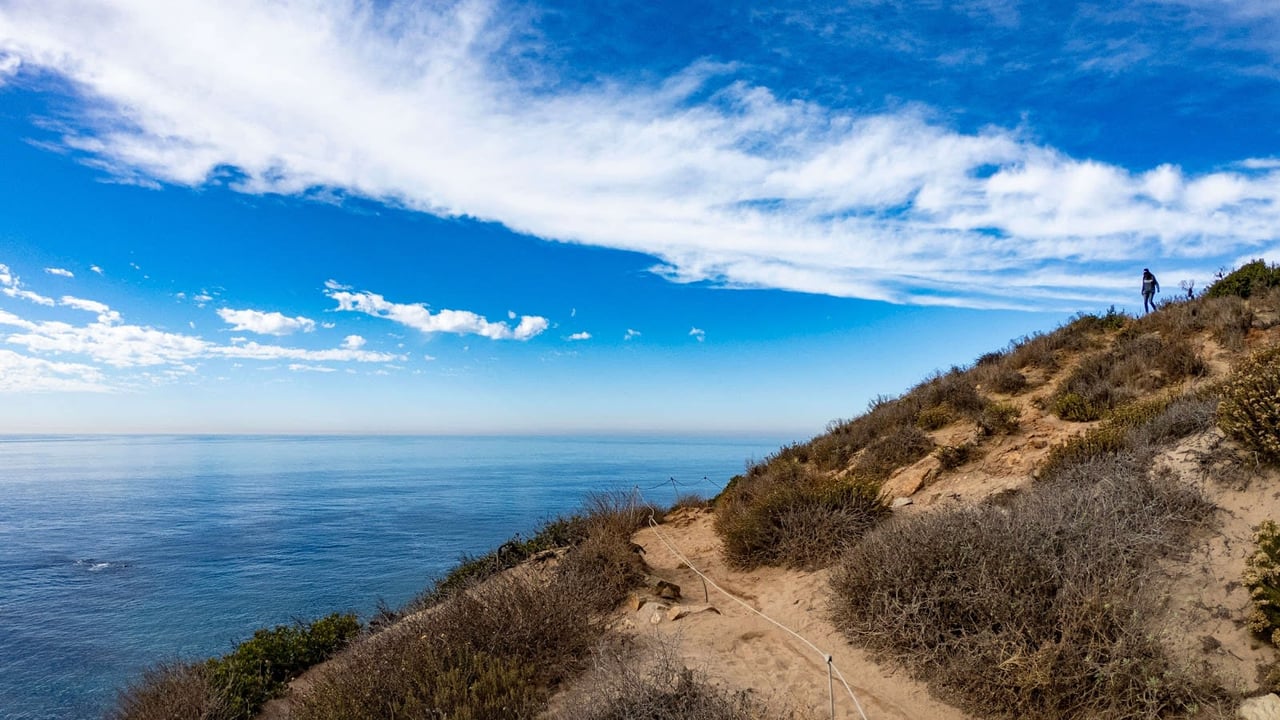
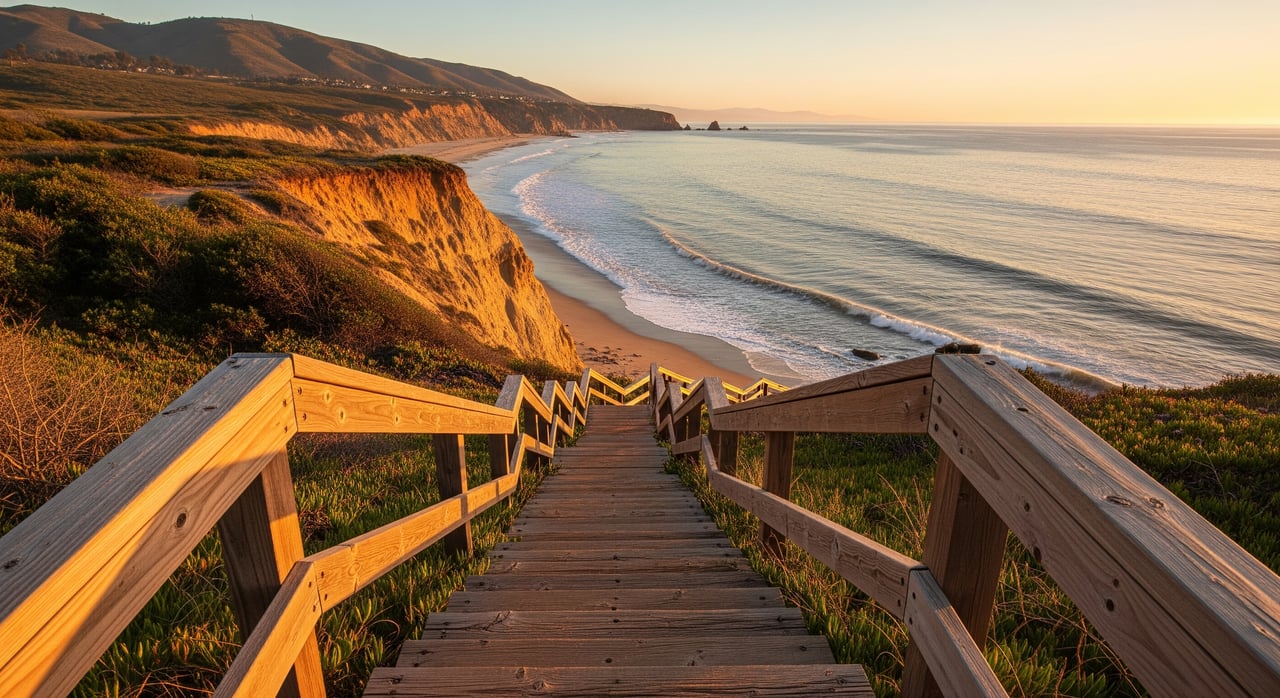
The usual way into Point Dume Nature Preserve starts at the cul-de-sac at the end of Westward Beach Road. From there, according to California State Parks, a gradual trail climbs to an ancient coastal bluff sand dune, and a boardwalk just below the summit leads to a viewing platform that tends to be more sheltered on a windy day.
That cul-de-sac sits at the far end of the beach access road, which is now closed to vehicles. Severe erosion damaged the beach access road on July 31 and August 1, and the Malibu Times reported the closure of Westward Beach Road and the Point Dume lot at the time. Here is what the Los Angeles County Department of Beaches and Harbors advisory, last updated October 30, says about current conditions:
- The access road, starting at the Westward Beach Road and Birdview Avenue intersection, is closed to vehicles at all times.
- Pedestrians and cyclists may not enter active construction areas, where work generally runs from 5 a.m. to 3 p.m.
- Restrooms 1, 2 and 3 are closed because of damage to the water service, and temporary toilets and handwashing stations are in place.
State Parks' own notice, posted August 28, says the beach is still accessible but the lower parking lot is not.
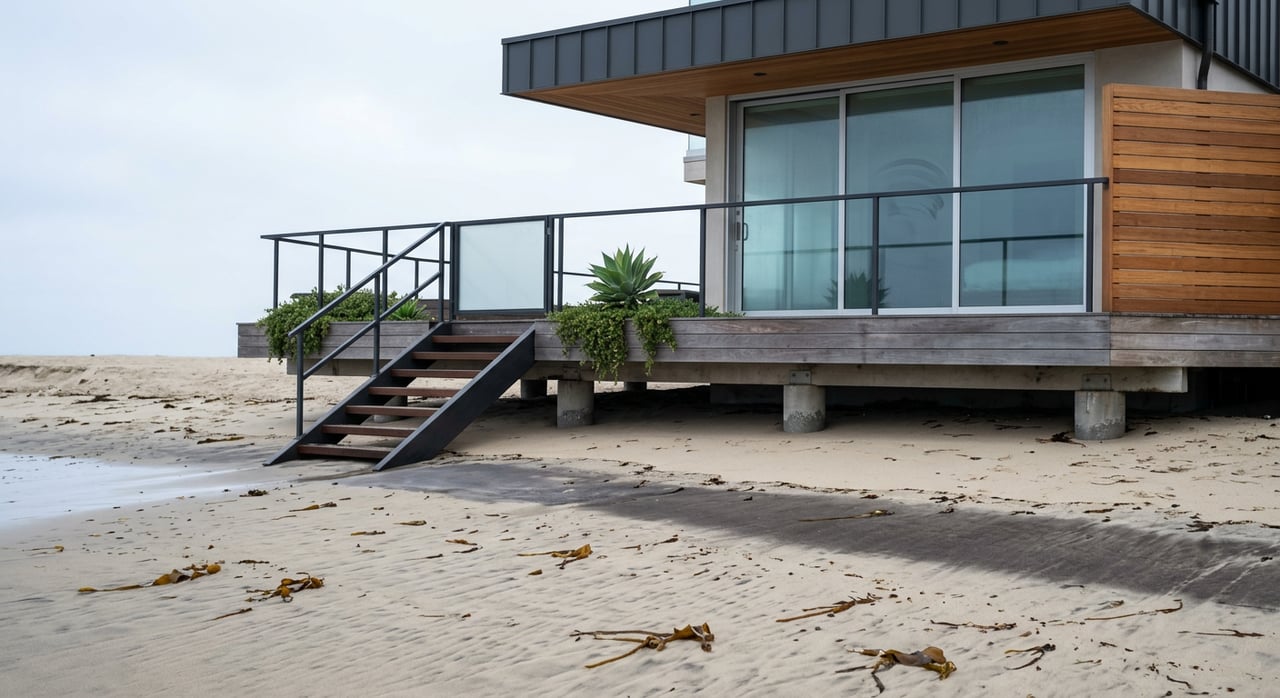
The work is moving toward the beach buildings. Contractors placed about 235 feet of rock revetment along the road in early August. Between September 8 and October 23 they added about 230 feet of new revetment and repaired about 230 feet of existing revetment. On October 26 they started emergency shoreline protection around the lifeguard building and two public restrooms. The County's reason is plain in its own numbers. The fenced dune in front of those buildings once reached about 45 feet seaward, and only about 20 feet was left when revetment work began.
The County's November 2 update lists the work still ahead: repairs to about 325 feet of existing revetment in what it calls Area 4, reconnecting the restroom water lines, and roadway and stormwater drainage repairs that engineers are still designing. A road that is still being designed in November is unlikely to be repaved by the start of the whale season in December. Plan for the closure to last well into the winter.
The top of the point carries more of the load
With the lower lot cut off, the headland's other approach takes on more of the load. State Parks lists free two-hour parking at the top of Point Dume. It describes that parking as extremely limited and says parking in residential areas is not allowed. Some disabled parking sits along Cliffside Drive next to the blufftop park area, and reaching the viewing platform from there involves a slight grade. The County also lists Metro Bus 534 at the Cliffside/Dume stop.
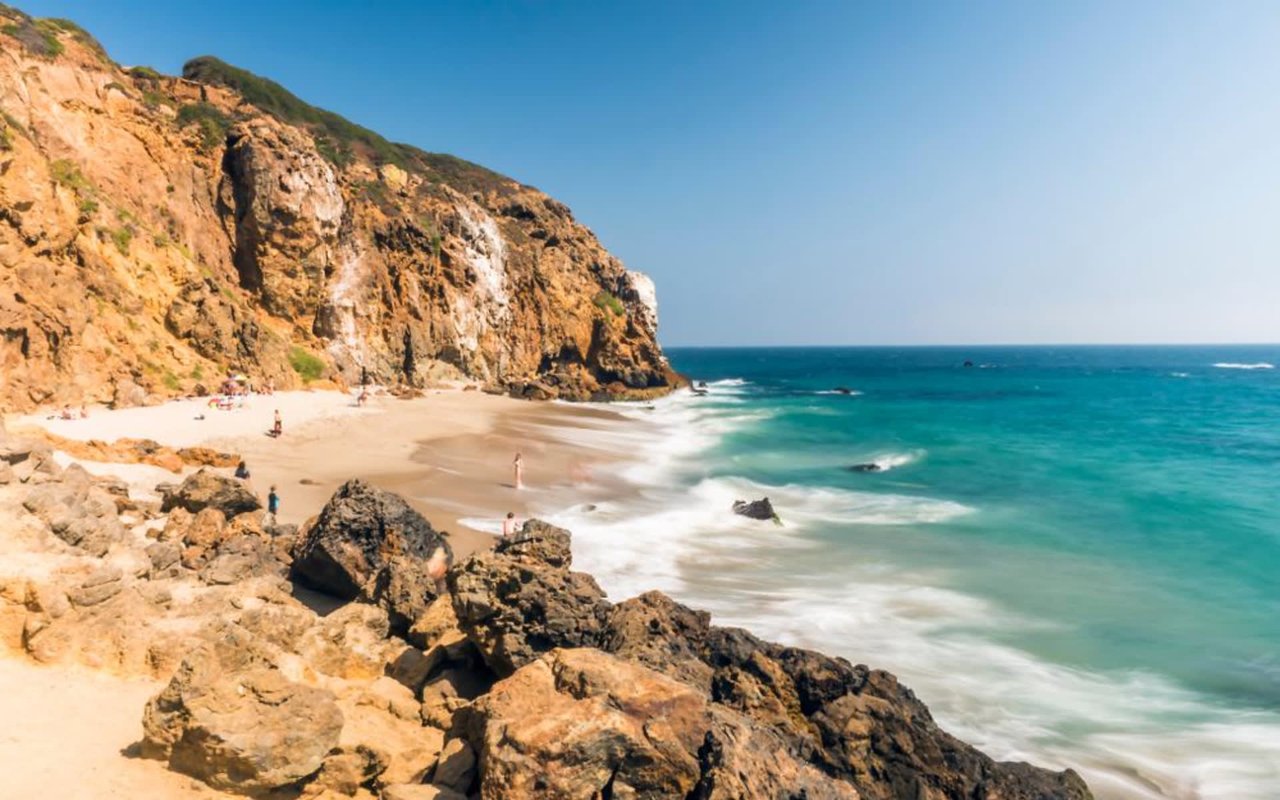
With construction active, two checks before heading out are worthwhile. The County advisory carries the current access restrictions and repair timeline. The State Parks district line, (310) 457-8144, can answer questions about the preserve itself. The County also describes a stairway on the east side of the bluff top that leads down to a more isolated beach with tide pools. Its status is another thing to confirm before a planned descent.
The preserve rules are the same as always. The State Parks brochure for Point Dume asks visitors to stay on fenced trails, because going off-trail erodes the sandy cliffs. Dogs are strictly prohibited in the preserve, fires are not allowed at any time, and nothing in the tide pools may be touched or removed. The 34-acre preserve was designated a State Natural Preserve in 1992, one of the highest levels of protection under state law.
The headland is worth the effort because of its shape. The brochure calls the promontory one of the few dry-land viewing sites for migrating gray whales that lets you get "close enough to count their barnacles."
The two counts that set expectations
Two very different numbers came out of last season, and both matter on the bluff.
The first is NOAA Fisheries' population estimate. In a July 15, 2026 report, NOAA put the Eastern North Pacific gray whale population at 15,930 to 20,530, or about 17,750 whales. The previous year's estimate was about 12,890, one of the lowest since counting began in the late 1960s.
The second is the shore count. The American Cetacean Society's Los Angeles chapter runs a daily census from the Point Vicente Interpretive Center in Rancho Palos Verdes, the nearest long-running shore count to Malibu. Its 42nd season ended May 25, 2026. In its season-end update, ACS/LA called the results the second-lowest southbound count in its history and a new record low for northbound whales.
| Measure | 2025–26 season | Season before |
|---|---|---|
| ACS/LA southbound gray whales | 214 | 130, the lowest on record |
| ACS/LA northbound gray whales | 445, a record low | 485 |
| ACS/LA southbound calves | 17 | 0 |
| ACS/LA northbound calves | 16 | 8, a record low |
| NOAA population estimate | about 17,750 | about 12,890 |
NOAA does not fully trust its own increase. Researchers say the jump likely exceeds what the population could produce through births, and they are reviewing their assumptions about migration timing and whale behavior. In NOAA Fisheries' account, research scientist Aimee Lang put the open question this way:
"One of the questions raised by our most recent count is whether we see a consistent proportion of the population every year, or whether other factors affect how much of the population we see and count."
NOAA also notes that some gray whales have left their usual north-south route in recent years, with dozens spending time in San Francisco Bay and other parts of the West Coast, possibly looking for food. NOAA's estimate describes the whole population. The shore count describes whales passing close to a Southern California headland, and that is what a person standing on Point Dume can actually see. A larger population that travels differently would explain a rising estimate alongside thin nearshore traffic.
Calves are the reason to come back in February
The most hopeful line in last season's data is the calf count. NOAA estimated 2025 calf production at 85, the lowest on record. At Point Vicente, the southbound calf count went from zero to 17, and the northbound count doubled to 16. ACS/LA called the season's highlight "more gray whale calves," with "cautious optimism."
Timing matters here. The State Parks brochure says that to see newborn calves migrating, you should be on the point from February into the spring. The northbound leg, when mothers and calves head back toward Arctic feeding grounds, is the part of the season where last year's improvement showed up. State Parks gives Point Dume's viewing window as December to mid-April. That leaves a long stretch after the holidays for the payoff.
The background is still sobering. NOAA reports that many gray whales stranded along the West Coast last spring before reaching their Arctic feeding grounds, and some were thin or emaciated. Strandings over the past two years have returned to roughly the range seen during the 2019 to 2023 unusual mortality event, though they do not yet meet the criteria for a new one.
Dates for the season ahead
- Saturday, November 21. The 7th Annual Montenido Art Walk runs from 11 a.m. to 4 p.m., according to the Malibu Times calendar, with details at Montenido.org. It's a good inland Saturday while the beach end of Point Dume is still under construction.
- Through December 23. Nancy Wise's Sea and Stone exhibition is on view at Malibu City Gallery in Malibu City Hall, 23825 Stuart Ranch Road.
- Tuesday, December 1. ACS/LA's census team returns to the patio of the Point Vicente Interpretive Center for its next season. The daily tallies on the chapter's whale count page are the best regional sign of whether whales are moving before you climb the point.
- December. The southbound migration begins. The County lists Point Dume and Zuma as gray whale viewing spots from December through March.
- February into spring. This is the window for mothers and calves heading north.
- Mid-April. The State Parks viewing season ends.
Until the County finishes the revetment along Area 4, restores water to the restrooms and repairs the road, the trip to the platform starts with the County advisory and a check of the free two-hour parking at the top of the point.
If you're planning a winter around the headland, or wondering how this season's construction affects the blocks around Birdview Avenue and Cliffside Drive, Sandro Dazzan was born in Malibu and is glad to share what he's watching. Book a Private Consultation.